1 LiveBloggin' the ICW

Wednesday, April 21, 2021

Boating Organizations are Failing Us

Earlier this week, I sent a letter to the leaders of the boating organizations and businesses that are supposedly representing us in Florida with regards to the anchoring legislation. I have not heard back from them about the concerns I brought up. 

Those organizations include the Seven Seas Cruising Association, the Marine Trawler Owners Association, the American Great Loop Cruising Association, Boat US and Waterway Guide.
Why should this concern you? 

It's because I wrote to them about significant issues in the anchoring bills currently in front of Florida’s legislation, including two major issues I have not yet brought up in public until now.  (Portions of that letter are excerpted in this blog post.)
These boating groups that you support financially are failing to represent your interests by not fighting to stop HB 1515 and S 1946, which are the Anchoring Limitation Area bills. 

One of the leaders in this group has told me that they don't like these bills, but that they are the best we can get so they are going along with them. That's a winning strategy if I've ever heard one.

These bills as written will keep you from being able to anchor for more than 30 days out of six months in designated areas, areas determined by local governments. And you can 'bet your bippy' that those will be areas that are ones boaters have found to be both safe and convenient.

So why are these groups not fighting these bills? It’s because they think, wrongly imo, that these bills won’t affect cruisers. And as I said, it's because they don't believe that they can stop the legislature from enacting them. 

That attitude is exactly how we got FL § 327.4108 and lost the right to anchor in Sunset Lake, Miami Beach, and Middle River, Fort Lauderdale in 2016/17.
 
Fine, you say!
I never anchor more than a couple of weeks in any one place anyhow. 
Great! And what happens when that one month in six gets reduced to two weeks, or one week, or 72 hours? That's what will happen as local jurisdictions start using the new laws. They'll ask for more and more restrictions on boaters until all our rights to anchor are gone, until we return to the mess that we had prior to 2007.

Can't happen? 
Uh, yes, it can. Why do you think we had Florida § 327.60? It was to prevent the patchwork of different local laws that we had prior to 2007 where places like Melbourne and Fort Lauderdale had 72 hour anchoring limitations. 

We were promised by the legislature that local authorities would not be permitted to enact local ordinances - and now we're right back to that.
Regardless of anything else, that simply isn't right. But there's worse, much worse, in these bills. Be afraid.

There are serious problems with this legislation

HB1515 has some huge problems associated with it. For starters, the FWC who will be tasked with implementing and enforcing it are concerned. More than one senior staff at the FWC has told me quietly that they do not have the resources - fiscal or personnel - to take on the requirements of HB 1515. 

They were unable to complete the survey required of them in HB 1221 (2019) and now the legislature is considering adding even more to their workload? How will that work out?

The FWC does not want, and cannot handle, the extra responsibilities mandated by the bill. They will be in favor of any effort put forth by the boating associations put forth to kill it.

Secondly, and again this is from the FWC, there is no data available, no survey, for any county in Florida on the extent of the “navigable waters” of the state. That being the case, there is no valid or legal way they can permit 10% ALAs because they simply don’t have the data to determine just how big 10% actually is.

Yes, some county can say that their proposed area is clearly less than 10% and yes, they could clearly be correct about it, but without the data showing what the facts are, those claims cannot stand. Florida doesn’t even have a legal definition of “navigable waters”, although they are trying to create one in the legislation. But, this lack of data is too big a weakness to be papered over.

Anything that any county does to create an ALA will be subject to a legal challenge demanding that the county present proper studies justifying their request, including a legal definition of what constitutes “navigable waters” - a state issue. If the bill does pass, it will be years before any community can get an ALA, provided that there is an entity willing to sue. And I assure you of this, there will be one, the Cruisers Rights Network of North America. 

Gulfport found that out the hard way last spring. We won’t back down.

Local governments will not want to spend the money on dealing with these lawsuits, or with doing the requisite surveys to authorize their ALAs, and the FWC has neither the funds nor resources to deal with doing the surveys.

These weaknesses are exploitable - provided these organizations wish to exploit them to defeat this bill. And so far, they have not.

But there is still far worse here: a Constitutional Violation of your rights

HB1515 states the following: 

(b)1. For a vessel in an anchoring limitation area under subsection (2), upon an inquiry by a law enforcement officer or agency, a vessel owner or operator must be given an opportunity to provide proof that the vessel has not exceeded the limitations described in subsection (2). 

Such proof may include any of the following: 

a. Documentation showing that the vessel was in another location at least 1 mile away within a period of less than 30 days before the inquiry. 

b. Electronic evidence, including, but not limited to, navigational devices or tracking devices that show the vessel was in another location at least 1 mile away within a period of less than 30 days before the inquiry.

2. If a vessel owner or operator fails or refuses to provide proof that the vessel has not exceeded the limitations described in subsection (2), the law enforcement officer or agency may issue a citation for a violation of this section.

Two lawyers and an out of state legislator have said to me that in their opinions this section violates the federal Constitution’s concept of "presumption of innocence”. For our purposes here, the definition of “presumption of innocence” from an online legal dictionary is useful, and is essentially the same regardless of which source you choose:

“Presumption of innocence: A principle that requires the government to prove the guilt of a criminal defendant and relieves the defendant of any burden to prove his or her innocence.”

Is there any reason that this has not been brought up to the various committees examining this bill? Isn’t this something vital that our associations would want to address?  

What the law currently requires of a person charged under HB 1515 is that they go to court to prove their innocence, if they could not do so when offered the opportunity by the LEO at the time of writing the citation. And that, to any thinking human being, is the exact opposite of “presumed innocent”. 

Now, would you like to know why this bill is written in this manner? It’s because it is absolutely impossible to get a conviction without having monitored the boat in question for the entire thirty days. 

All the individual charged has to ask the officer in court is the following: 


“Sir/Ma’am, did you observe this boat continuously for the past thirty days?”
You did not? Then please, Sir/Ma’am, provide this court with proof that the boat in question did not leave the ALA for thirty days.”


END OF STORY right there. It is the prosecution’s legal obligation to provide proof of guilt. It is NOT the accused’s obligation to prove he left the ALA before the 30 days was up. There can be no conviction and NO way of forcing anyone to move their boat without significant legal issues arising to the prejudice of the acting authority.

Let us consider this point: shouldn't this very important issue be brought up with the boating group members? This one thing alone will kill HB 1515 at this late date. It's central to the entire bill. 

I won’t even get into how the way this bill is to be enforced is basically an intimidation tactic, one that will force boaters to leave rather than fight for what is theirs: the right to remain legally anchored.


Oh, What the Heck, Let’s Go There.

So, you tell me, if the boater is over thirty days in one place… they need to move on. They won't be harassed if they’ve not been anchored there that long.

Sorry, here’s what will really happen, because I’ve seen it happen way too often, including to myself back before 2007 when I was in Fort Lauderdale’s 72 hour anchoring bylaw area. 

The law rolls up in his/her police boat and demands you prove you haven't been there for 30 days. For whatever reason, you cannot prove this and you are forced to move, or you get a citation to appear in court. Most boaters of course will simply move on, they don't want the fight. That's what I did in Fort Lauderdale.

Can't happen, won't happen, you say? 

Sorry, but it will. Here’s what I’ve personally observed in the past. 

In 2007, an assistant city attorney in Melbourne blatantly told me that she would charge boaters under their local 72 hour ordinance, regardless of the terms of Florida Statute 327.60, and let the accused appear in court to prove her wrong. I stopped that from happening and forced Melbourne to stop enforcing their local ordinance.

In 2016, Miami Beach attempted to enforce their illegal anchoring bylaw. Working with a local boater, Dr. Tenzer, a group of us put a stop to that. Tenzer got a financial settlement from the City for his legal costs.

In the spring of 2020, the Chief of Police in Gulfport FL lied outright about the issue of their illegal enforcement of 327.60. As you all know, the CRNNA stopped the enforcement of their illegal ordinance.

Just a few weeks ago, the City Attorney in St. Petersburg tried to BS me about whether their police were attempting to enforce their local, illegal anchoring ordinance, which they were doing. We ended that practice there also.

If you believe this can't happen, you're mistaken. As I’ve just demonstrated, it can, it has and it will again. 

It’s happening now in fact. Some of you have told me of several jurisdictions that are using illegal ordinances to intimidate boaters and move them on. The CRNNA can’t deal with these communities yet as we don’t have the evidence we need to stop them. And for the record, we do this work quietly, respectfully and seeking to gain the co-operation of the local authorities in eliminating enforcement of these illegal ordinances. We’ve been successful in every case, although St. Petersburg did require a second warning before they got the message.

Bottom line here as we know is that local authority listens to their local taxpayers, not the individual boater, and really, what would you do as the boater in this situation? Take the ticket and go to court, or move on? We all know the answer to that one, don’t we?

HB 1515 will affect every cruiser traveling in Florida who chooses to anchor. This kind of behaviour from local law enforcement was the case pre-2007, it’s been the case all along, and it will be the case going forward, but it will be far worse without the protection of 327.60. 

So What Can I Do?

First of all, if you're a member of one of the above organizations, contact your executive and ask them why they aren't acting on these issues. 

Here's what you'll get back from them.

They'll tell you I don't know what I'm talking about, or I'm wrong, or I'm an idiot and you should just ignore me. 

Please tell them, from me, that if they believe any of that then they should explain why, to me, instead of ignoring what I've said, so I can give you the correct information. Tell them also that they were wrong in 2016/17 and they are making the same mistake now - trusting the legislators to not go back on their word.  

Secondly, demand that they address these issues before we lose our rights to still more anchorages in Florida. They were, all of them, wrong in 2016 and 2017 and they are doing the same thing now. These groups are your groups if you pay dues and they are supposed to do what you want.

Third, and this applies to everyone, you need to right now contact the members of the Florida legislature about these issues and kick up a fuss. Send emails and even more importantly, phone them. Make it clear to their staff, since you likely won't reach the member, that you are concerned about the significant problems these bills have.

Next, contact your boating and local media, particularly if you live in Florida. Explain to them why you are concerned. 

Finally, share this blog post with everyone you can. More than just boaters need to be concerned when the error in the bill is a violation of your Constitutional rights.

You can follow this issue on the CRNNA's Facebook page for up to date information.

We have only a few days to stop this from happening.
 

If you don't take action immediately, you can expect these bills to pass. I promise you that if we don't act now, within three to five years, there will be huge areas in Florida where you will not be able to anchor overnight, if at all. 

I wish I was wrong - but I'm also wishing I'd spoken up in 2016 when the original mistakes that lead us to this point were made by our boating organizations.

The people running our boating groups think they are right, they think they are doing the proper thing here. Bless them, their hearts are in the right place, but they are not doing what needs to be done and that has to change.

It's time to get angry and speak out. Today. Right now. We don't have any time left. If you're a  boater and don't want to lose your right to anchor in Florida, act now.


Sunday, April 18, 2021

The Lies About Anchoring Limitation Areas


If you've been following the anchoring issues in Florida this year, you're aware that the legislature has six (count 'em!) bills on the issue in front of them. All six of those bills threaten to take away significant anchorages, and even your right to anchor at all in the state.

A lot of attention has gone to HB (House Bill) 639, which started out quite benignly, even adding some much needed powers to the Florida Fish and Wildlife Commission's ability to deal with derelict boats. It was then amended to include a '90 day and move' limitation on anchoring in Monroe County, the Florida Keys. Once you're boat had been in the same location for 90 days, you had to up anchor and move, according to some accounts, as much as five miles away.
That of course would cause incredible harm to the Keys' workforce and economy. Many Keys residents  live aboard as there is no affordable housing in the Keys - well, not if you aren't a tourist, or very, very wealthy. On top of that, all the marinas are full (and that's presuming they're affordable which for many they aren't) and the moorings are also full.
As a result of the pushback from Keys' boaters, 639 has been amended to require that Monroe County install 300 moorings in the Key West area to accommodate those who would be affected by this bill before the 90 day limit can be enforced.
The end result, should 639 pass, is that the situation is now in the hands of local politicians and boaters. Keys' boaters are organized, and able to fight for their rights, and local politicians are aware of the issues. The likelihood of these moorings being installed anytime in the near future is fairly low, so that threat seems to be over. For now.

HB 1652/ S1337 are bills that would have ended overnight anchoring in several locations in North Miami, as well as North and South Lakes in Hollywood, and in Lake Sylvia in Fort Lauderdale. Those last three are important 'staging' anchorages for cruisers heading to the Bahamas or further south.
Fortunately, these two bills are moribund and have not seen any committee action to move them forward.

The last two bills, HB 1515 and its companion in the Senate, S 1946, in my opinion present the real threat to boaters and cruisers.
These are the so called 'anchoring limitation area' bills which amend Florida Statute 327.4108. They propose to allow county governments in Florida to limit anchoring to 30 days in any designated "anchoring limitation area" - defined as up to 100 acres and to a maximum of 10% of a county's navigable waters. 
There are significant problems with these bills. Disregarding the fact that these bills are a violation of the promise boaters were given in 2007 
when Florida statute 327.60 was created, to wit, to disallow local governments any authority to enact anchoring legislation, there is no definition of "navigable waters".
The FWC has advised us that there is no data for any Florida county as to how much water is "navigable". There is in fact no definition of "navigable" in the bill, although an amendment, withdrawn, did attempt to make such a definition.
In addition to that, the FWC has informed me that they simply do not have the manpower to conduct the requisite surveys that would determine this information.
So tell me if you would, how do we know when that 10% limit has been reached in any county? We don't, we can't know, can we? On top of that, just what portions of the water are navigable? How do you define "navigable"? I and others have not been able to find a definition of the term in the Florida statutes.
Is it six inches, navigable for a canoe or SUP? Is it three feet, navigable for small powerboats? Or is it six feet and more, a depth useable to the vessels which this legislation will affect, since canoes and SUPs generally don't anchor overnight.
This being Florida, I won't say they never do, because, well, we're talking about Florida.
But it gets even more egregious, if you can imagine that. These bills state the following:

(b)1. For a vessel in an anchoring limitation area under subsection (2), upon an inquiry by a law enforcement officer or agency, a vessel owner or operator must be given an opportunity to provide proof that the vessel has not exceeded the limitations described in subsection (2).
Such proof may include any of the following:
a. Documentation showing that the vessel was in another location at least 1 mile away within a period of less than 30 days before the inquiry.
b. Electronic evidence, including, but not limited to, navigational devices or tracking devices that show the vessel was in another location at least 1 mile away within a period of less than 30 days before the inquiry.
2. If a vessel owner or operator fails or refuses to provide proof that the vessel has not exceeded the limitations described in subsection (2), the law enforcement officer or agency may issue a citation for a violation of this section.

Now correct me if I'm wrong, but doesn't this violate the Constitution? Isn't there this concept called "presumption of innocence"? Since when is it a citizen's obligation to prove s/he is innocent to avoid getting a citation?

That I am aware of, the only groups that are opposing these two bills are the National Marine Manufacturers Association and the Marine Industries Association, and of course, the Cruisers Rights Network of North America, of which I am president.
The other boating organizations/businesses involved in this issue - the Seven Seas Cruising Association, the Marine Trawler Owners Association, the American Great Loop Cruising Association, Boat US and the publication, Waterway Guide (full disclosure, I worked as an editor for WG for over 10 years) are all in favour of these bills.

Beyond what I've noted above, just what other issues are there with these bills? 

I'm glad you asked that.
Florida statute 327.4108 is the bill created in 2017 that ended our right to anchor overnight in Sunset Lake and most of the Venetian Causeway in Miami Beach, and Middle River in Fort Lauderdale. You can read more about that fiasco here.

Essentially, the legislature lied to boaters in 2016 and we lost the right to anchor overnight in those three areas. The boating groups dropped the ball on this, and we cruisers pay the price.
The current anchoring bills posit that ALAs (anchoring limitation areas) will be a maximum of 30 days out of six months. My question - and it should be yours also - is this: how long before 30 days becomes 15 days becomes one week becomes 72 hours?
How long before some county is given the right to ban all overnight anchoring? You know it's going to be demanded, and given what happened in 2017, how can any county or city be told 'no'? The precedent has been set.
How long before we return to the "wild west", as the late Claiborne Young called it, of a patchwork of anchoring rules across Florida?
Answer to all of the above? Not long at all.
The way these bills are written, the FWC is tasked with approving these ALA's. They have already indicated to myself and others that they don't want, and cannot handle, the additional workload of these bills. That is before adding in the requirement of surveying navigable waters and proposed ALAs, which they would be required to do to approve these new restrictions.
Oh, and have I mentioned that these bills clearly violate the Public Trust Doctrine, which states that the waters of the state of Florida are held in trust for the use of all?

So what would these bills actually do to cruisers like you and I? 

Essentially, communities that want to eliminate anchoring in residential neighbourhoods will use them to remove boaters, shepherding them into areas that do not offend the homeowners. It is guaranteed that these locations will not be suitable for anchoring and will be inconvenient for shore access or local amenities.
But, you say, I can anchor for 30 days!
Yes, you can. Then the law rolls up in his/her police boat and demands you prove you haven't been there for 30 days. For whatever reason, you cannot prove this and you are forced to move, or get a citation to appear in court. 
Can't happen? I had an assistant city attorney in a major east coast city tell me, back in 2007, that she would charge boaters under their local ordinance regardless of the terms of Florida Statute 327.60 and let them come to court to prove her wrong.
In the summer of 2020, the Chief of Police in Gulfport FL lied outright to me about the issue of their illegal enforcement of 327.60.
Just a few weeks ago, the City Attorney of a major Florida west coast city tried to BS me about whether their police were attempting to enforce their local and illegal anchoring ordinance.
 
So don't tell me it can't happen. It can, it has and it will. These people listen to their local taxpayers, not you and I, and really, what would you do? Fight, or move on?

This will affect every cruiser traveling in Florida who chooses to anchor.

In other words, these two proposed bills, 1515 and 1946, are a mess. They should be voted out of the House as poorly considered, poorly researched, and damaging to everyone's interests. While they seem reasonable at first glance, they are anything but.
Furthermore, they will be amended as time goes on to permit more, and more restrictive, limitations on anchoring. They will eliminate valuable anchorages that cruisers depend on to travel through Florida on their way to the Bahamas and elsewhere, or just to hang out in for a night or three as they explore the state.

Oh, but your boating organization - the SSCA, MTOA, AGLCA, Boat US, the Waterway Guide - they say it's all good, don't worry, be happy?
With the exception of the Waterway Guide, which was not then involved, they were all wrong in 2016, and all of them are wrong again today. Let me repeat that - they were all wrong. They blew it.
That statement is not going to make me any friends in that group - but since they can't stand me anyway because I don't fall in line with how they want to play this game, it's no loss. Someone has to speak the truth.
If you are a member of one of these organizations, you need to contact your president and fellow members and acquaint them with the facts as I've laid them out.
I promise you, they'll tell you I'm being a fear monger. They said that back in 2016. They'll tell you I don't know what I'm talking about.
They said that too back in 2016.
Demand that they show you where I am wrong. They can't. I've already seen them try. 
We have very little time left to fight back against HB 1515 and S 1946. You need to step up and make your concerns known to your boating organizations, to your fellow boaters and to the legislators.
We have the emails and an email responder set up at the CRNNA's Facebook page for you to contact the legislators. Join us there for more information. Share this blog post far and wide with your groups and on your FB page so that other boaters become aware of what's going on. Even if you're not in Florida, you can speak out, you can help.

Lastly, what will the CRNNA do should these bills pass? We do have a plan, which will be to challenge these bills in court. According to lawyers I've spoken with, these bills are very vulnerable to a legal challenge on numerous fronts. I'd rather not have to go that route, so let's do what we need to do and stop these bills now.

Tuesday, May 19, 2020

Fighting the Good Fight - Meet CRNNA

A friend called me up in mid March to tell me about the hassles that he and others anchored out in Gulfport FL were experiencing. Seems that the City of Gulfport was enforcing a 72 hour anchoring ordinance and threatening to ticket them and impound their boats if they did not move outside of Gulfport's jurisdiction.
In other words, same same ol' as usual in Florida. Problem is, such ordinances are illegal under Florida statute 327.60. No municipality can enact or enforce any anchoring ordinance on a non liveaboard vessel. So the City of Gulfport was acting illegally. They even handed out a ticket to one boater.
I made some phone calls and asked some questions, did some research, spoke to the City Manager, City Attorney and Chief of Police, and got the usual runaround. They told me that in their opinion, they were acting legally. I told them, and got Boat US to tell them, and even got the FWC to tell their marine officer, that they were wrong.
Over a month went by and nothing changed. The only way to deal with this was to sue the City. Thus, the Cruisers Rights Network of North America was born - www.CRNNA.com - a non profit organization.
The CRNNA's purpose is to defend the rights of boaters, and to educate boaters, the general public and the authorities about the realities of the boating and cruising life. To demonstrate that we aren't all crack addled, mindless bums one step up from living under a bridge.
We held an online fund raiser that was a huge success, hired a lawyer and are now working the legal process. We've moved to have the ticket dropped, and included the filing of a motion to declare the City's ordinance unconstitutional with notice to the State Attorney General. We have the support of the FWC in this also, and they have been most helpful.
Future plans are to take this victory - because that will be the outcome - and start on educating every coastal city in Florida that they cannot violate the laws to get rid of what they see as a problem. Following that endeavour, we plan to start looking at our boating community, and find solutions to the derelict problem, and the problems created by people living on boats who simply should not be there. We will also be involved in the discussions about future legislation in Florida.
In other words, a lot to do. (We could use your help if you wish to get involved, see the details below).
But what about the other organizations? Well - the SSCA is a spent force, they've got enough internal issues surrounding just surviving as an organization that they can't deal with outside issues. Boat US and the MTOA and AGLCA are involved, as they have been in the past, but it's important to remember that they don't get down in the muck and fight, as we are doing in Gulfport. The CRNNA on the other hand is designed to function both in an advisory capacity as regards legislation, and as an 'enforcement arm' for boaters' rights should that be required.
If you'd like more information - and there's lots more I haven't told you - go to www.CRNNA.com, and also to our Facebook page.  And please, sign up on our Facebook page. The more people we represent, the more impact we will have with the people we deal with, and the better we can look out for your rights on the water. If you're interested in becoming active in our work, email me at Cruisers Rights.

For anyone planning on going south from the Great Lakes this year, some great news. According to the New York State Canal Corporation, locks will begin opening on July 4. The current schedule, according to the gentleman I spoke with, is subject to change, but it will be possible to transit through the locks to the Hudson River during the summer. In other words, all of you Great Lakes boaters will not have to give up your tropical cruising dreams! The updated schedule can be seen here, at Canal Corp.

I've not promoted this year's Sail to the Sun ICW Rally as heavily this spring due to the coronavirus issues, including the now resolved potential for problems getting through the Erie Canal. Now that that is no longer an issue, it's time to start planning your trip south this winter. If you'd like a Rally brochure, go to Sail to the Sun Information, fill out the form and I'll get a brochure to you right away.
This year's voyage will begin on October 20 out of Hampton VA, and end in mid December in Miami Florida. All of the past year's fun events will be included - the Pirate's Rum Distillery tour, the visit to the Beaufort Maritime Museum to learn about Blackbeard, the St. Mary's Thanksgiving Dinner, the dinghy raftups, shrimp boil, pig roast at Dowry Creek - plus all of the group dinners, docktail parties and fun times.
All of your route planning is done for you, taking away the stress of worrying about currents, shoaling and provisioning. Also your dockage is pre-arranged for the Rally - something you can't do on your own as marinas typically don't want to reserve during the snowbird season.
It's the most fun on the ICW, so if you're heading south, don't miss out! Just ask any past Rallier what they think of the Rally and you'll be signing up before they're done talking!
If you don't know a past Rallier, here's a video that gives you a sense of what the Rally is about.


Wednesday, June 26, 2019

Bonus edition - Two Rants!!! Georgia On My Mind, and West Marine Dinghy Design

YESSIREE FOLKS, STEP RIGHT UP, NOT ONE BUT TWO RANTS TODAY FOR THE PRICE OF ONE!
I can hear everyone's heart going pitter pat with this announcement - not one, but two of Wally's world famous rants. This will be epic. Sit down, grab some popcorn and your favourite adult beverage, and enjoy!

Georgia On My Mind...

As many of you know, I've been involved in the Georgia anchoring debacle since late May when it became publicly known that the state wanted to create anchoring permits, charge people for anchoring, and limit where they could anchor. The cancer that we have been dealing with in Florida is metastasizing northward, sorry to say.
What really gets my goat however, is how this came to be. The original complaint which led to the DNR creating this horrendous legislation allegedly came from a judge who claimed to have observed someone pumping sewage overboard from their boat. This information came to me through a political source and was trustworthy, but not quite on the money. Here, publicly for the first time, is how this monstrosity, HB201, was conceived.
This bill got its birth because a GA judge, former Brunswick Judicial Circuit Chief Judge Amanda Williams, was upset over an old Navy vessel legally tied to a dock near her office building. She made a complaint to her House Rep, Don Hogan that a boat anchored out was pumping waste overboard. So she lied about the boat if this is true, and can anyone please tell me how she knew the boat was pumping out anyhow?  Hogan, fyi, sponsored HB201, probably dealing with the DNR to create it. I'll get back to this point.
GAMBA, Georgia Marine Business Association, became involved. Why, when and how isn't entirely clear, but there appear to be significant connections between Williams and marina operators who are GAMBA members.
Now Williams,  who was the source of the original complaint, isn't your typical upright and honest judge. She was formally removed from the bench some years ago and very nearly faced jail for serious charges - see this - Former Judge Booked and Released on Bond
That is not the worst of it however, not from where I stand.
One of the beneficiaries of her brand of justice was the son of the current owner of a Georgia marina. Quite a few years ago, he was placed in a drug court diversion program, over the protests of the district attorney, for his offences. Nonetheless, successfully completing the program ensured that the participant would not have a criminal record, which I'm sure you agree is a substantial benefit. Don't get me wrong - if someone completes the program and stays on the straight and narrow, I'm all for it. It's a good thing, but that's not the point here.
This marina stood to gain from this legislation that this judge wants, and in particular the 1000 foot rule, because it eliminates an anchorage that they object to adjacent to their marina.
That being said, there is no evidence that the man's family interceded on behalf of the erring scion. Perhaps the judge is just a kindly soul and did this on her own. 
A favor was done, solicited or not. A debt was created, acknowledged or not.
Next, the president of GAMBA, Charles Waller, would receive a significant benefit from the 1000 foot setoff that was proposed. It would eliminate a USCG anchorage that is adjacent to his marina that he apparently finds problematical. Without any valid reason that I can see, I would add.
Again, there is no evidence to substantiate this motive, but I do have emails from GAMBA that alluded to this issue and Waller's problems with it.
Was this why GAMBA was so keen on this legislation, because two of their members stood to benefit from it? Seems likely, but I doubt we'll ever know for sure, and GAMBA is all on the side of cruisers' rights now.
Anyhow, what we are seeing is that Hogan got a call from Williams about someone pumping overboard from the ex-Navy boat, and then got together with the DNR to deal with Williams' issues. Along the way, members of GAMBA saw that they could benefit from this legislation and got behind it.
The bill got passed with no studies, no public input, nothing. Only one vote against it.
Then we, the boating public, found out about this at the end of May and raised a huge stink. GAMBA reversed its position, with Exec Director Amy Thurman telling the media that GAMBA wasn't supporting, never supported, the 1000 foot rule. Unfortunately for Ms. Thurman, I have the emails from her to prove she said exactly the opposite, that in fact, GAMBA strongly supported the 1000 foot setoff proposal.
Then - the judge who I'm told was the complainer showed up to speak at the DNR hosted public hearing in Brunswick last week. She made a lovely little speech, but never told us who she was.


However, a cruiser at the meeting was a retired FBI agent - I just love that touch, lends drama to the whole thing - and he busted her for her deceptions the next day in a post on the Save Georgia's Anchorages Facebook page.
Since then, we've determined that the boat in question was behind her office, not her home. How did we do that? Her state House Representative Don Hogan, the bill's sponsor, made specific reference to it in his talk that night.
It appears quite likely that House Representative Hogan was fed a line of crap about what was actually going on, was given a considerable amount of bad or dishonest advice from a number of people, including some at the DNR, and trusted people he should not have to do the right thing. It didn't help Hogan that the complainer was someone of significant influence, not just any upset waterfront property owner. Talk about caught between a rock and a hard place.
So what happens next, now that the old boys (and girls) network has been caught out?
The Save Georgia Anchorages group (see their Facebook page here) is now working with the various members of the Georgia legislature to ensure that HB201 is brought back before the legislature in the 2020 session to be properly amended. We are also preparing a presentation for the Coastal Committee Board of the DNR, to ensure that cruisers' issues are properly presented to them before any new rules are put in place. And we need your support in this work.
What can you do to support this? It's important that the DNR be aware that boaters object very strenuously to HB201. You can make your views know by writing to Kelly Hill, Coastal Resources Division, One Conservation Way, Brunswick, GA 31520 <Kelly.Hill@dnr.ga.gov>
Talking points, sample letters and other useful information are available at the Save Georgia Anchorages page. Please join us in defending your rights to anchor in Georgia.

Is This Any Way to Build a Dinghy? NO!

I just launched a West Marine inflatable after selling my 10 foot aluminum, which I now sorely miss. But hey, I got a great price for it.
Now there's nothing really wrong with the new inflatable, but there is ONE thing that drives me nuts, and it's the same thing I hated about the first one of these I had ten years ago: the drain plug.
Just how hard is it to design a properly functioning drain for these little boats? Apparently, VERY hard.

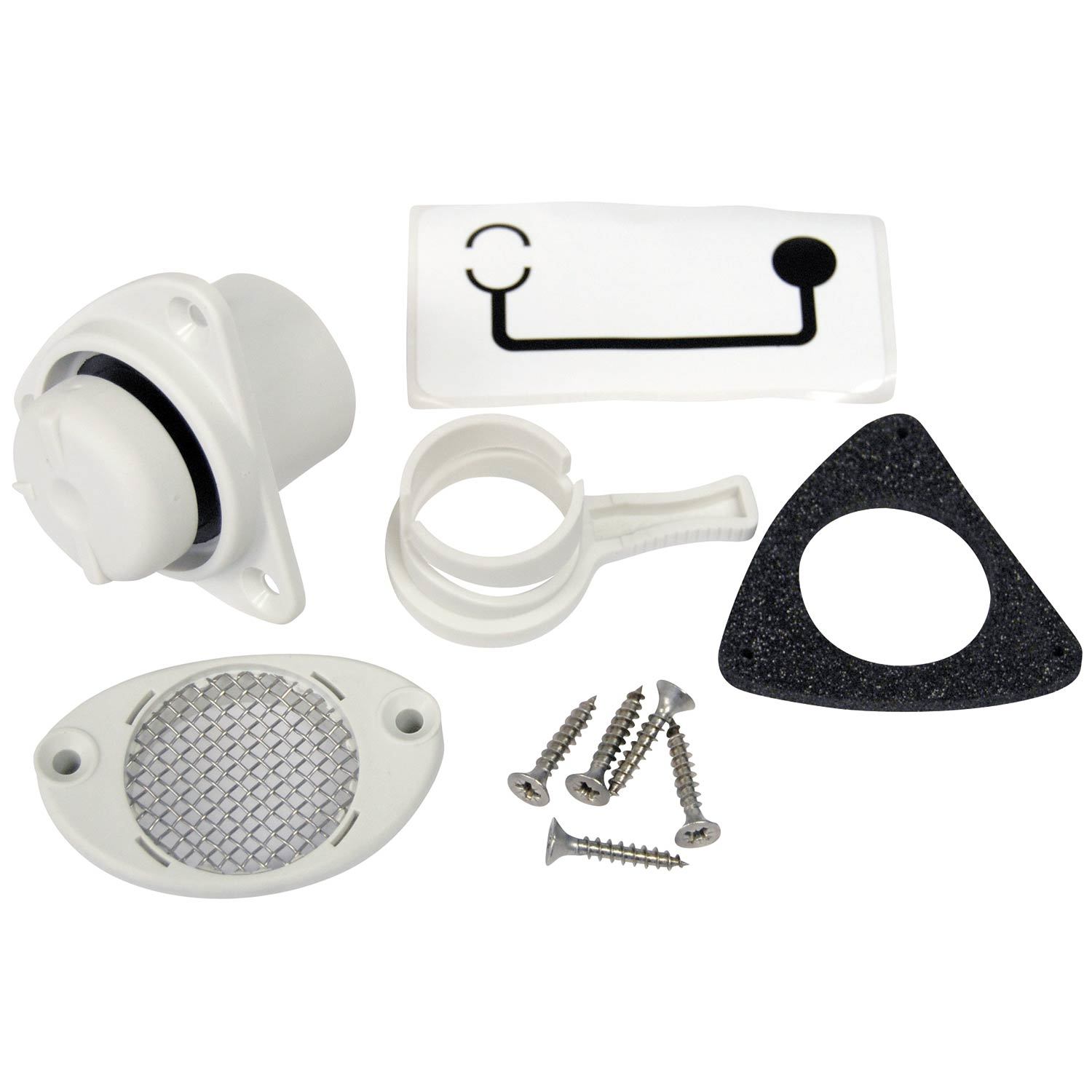
The first one of these I had had a fancy design with a lever, a screen, all sorts of little doodads to it as you can see from the photo. I am absolutely certain that the engineer who designed this monstrosity was overhyped on caffeine on a Monday morning. There is no other rational excuse for this thing. Ok, maybe LSD or magic mushroom, but other than those...
The problem is, it caught every single piece of debris in the dinghy, and plugged up. And when it plugged up, as often as not it would then bugger up the drain so that the drain leaked water into the boat.
So we have a drain that won't drain when you need it to, and lets water into the boat at all other times. To fix it involved removing it from the boat, disassembling, cleaning and then reassembling and reinstalling it. Sometimes that was a weekly occurrence - but only when it wasn't happening every other day.
So I eventually sold that boat, bought the aluminum, and then a few months ago, moved back to a new inflatable sportboat from WM. It does not have the same drain. If anything, this one may be worse.
It doesn't have the fancy engineering. It's some kind of rubber flap, kind of a one way thing that supposedly keeps water from entering your boat, provided the plug is in place. We'll return to the plug in a moment, but suffice it to say, if the plug is in place, the flapper isn't needed.
The problem is, the drain doesn't allow water out of your boat unless you continuously 'tickle' it with your finger. Why? I presume it's because minute particles of debris plug it up. At least the old design, bad as it was, needed a visible piece of crap to bugger it up.
Then, it takes forever to drain because of the flapper valve, and because it keeps plugging up with tiny, invisible pieces of crap.
Now, to the drain plug. This rubber beauty goes in the outside of the drain hole and is attached to the boat with a piece of string. If you lose one - which according to my extensive survey of Sportboat owners who were in Marsh Harbor on April 22 - takes 4. 873 days on average, it will cost you $20.95 US to replace it.
That's right. An Achilles Rubber Self Bailer Drain Plug with String (Part #ACHC441B), a 1 3/8" plug that is guaranteed to be lost will cost you more than three Kaliks at Snappas. That's just wrong.  So if you're smart like me (ignoring that I was dumb enough to lose the stupid thing in the first place), you go to the local hardware store and get a rubber chair tip for $2.44 (but $5 in Marsh Harbour) which fits perfectly, AND you have a choice of beige or black. It's all about style, baby!
So, I'm asking West Marine CEO Ken Seipel to get involved here.
Ken, I know this isn't your fault, you've only been there since last December. But please - tell these engineers that designing a functioning drain plug for your inflatables is NOT rocket science. It's not.
Here's how you do it.
You drill an oversized hole low in the wooden transom of the dinghy. You then fill the hole with fibreglass resin, let it cure, then redrill the hole to fit the $20.95 goldplated drain plug. You put the drain plug INSIDE the dinghy, where it won't get broken off and sink into the depths. You use something more durable than a piece of "string" to attach it to the boat.
If you want to save your customers some money, you use West Marine part Model # 375493, pictured to the left, which retails for $10.99 but that, because of its design, is unlikely to be lost. I know, because I had one in my aluminum boat for 6 or 7 years. Never had a moment's problem with it.
Uh, full disclosure here - I bought it at a competitor's place of business for $5.95. Sorry.

Please, Mr. Seipel, just do this before I buy my next dinghy. I don't know if I can stand the frustration of dealing with another overdesigned, underperforming drain plug. You can do this, Sir, and I and thousands of Sportboat owners beg you to do this.Thank you.


Ok, enough ranting, on to happier things. The Fifth Annual Sail to the Sun ICW Rally is moving along well, and we're half full now. Our departure date from Hampton will be October 21, one week after the end of the Annapolis Sailboat Show. Our anticipated arrival in Miami is December 12, after eight weeks of fun and adventure on the not so high, but imminently comfortable, safe and enjoyable, seas of the ICW.
During that eight weeks of fun and frolic, there will be shrimp boils, a blue crab feast, a visit to a rum distillery for the pirates amongst us, dinghy raftups, dinners out, dinners onboard, and an all round great time for all. We're even considering an alligator bbq...yes, you read that right: gator burgers and steaks, done by a professional chef.
If you want more information, or a brochure on the Rally, or even a free copy of my free ICW ebook, or all three - go to the Sail to the Sun ICW Rally page and you can request it from there.


Bonus Rant #3 - The Last Straw


Some time ago, nine year old Milo Cress created a first-world fuss over straws. By his calculations, suspect at best, and as reported by USA Today: "as Cress began to dig into research on plastics and the environment, he noticed there wasn't much data: "I couldn’t find anything on our use of straws in the United States," he said. 
Gee, really? In all of history, nobody studied straw usage? I can't believe it, there has to be some useless little university researcher out there who had nothing better to do with $50,000 in grant money than to figure out what the story was behind straws.
So Cress determined the status of straws through a truly questionable study - about the kind of thing you'd expect from a precocious but misguided pre-teenager.He called straw manufacturers himself, asking what they estimated to be the straw market in the United States per day. Some gave him a yearly estimate, which he divided by 365. "Others gave an estimate of around 500 million straws," Cress said. "That was the number that I stuck to, because it seemed to be around the middle of what they were saying.""
That's his research. On this sort of thing do our fates turn - a nine year old's guess at something of minimal importance in the greater scheme of things.

So of course, following the young lad's revelations, everyone got all eco correct and decided to ban plastic straws. Good move, right?
Well, have you ever tried to drink a great thick milkshake - the only proper way to have one - through a paper straw? You end up with your lips caved in from sucking so hard, the staff at the Steak and Shake or Sonic Drive In laughing at you as they watch on their video monitors. How humiliating is that?

All of this over a 9 year old boy's unproven and unprovable contention that we use too many straws.


Friday, May 31, 2019

Anchor Rant - Now it's Georgia's turn

Well, the Florida anti-anchor illness has now spread to Georgia. Georgia just quietly passed a law that will force you to pay $5 per night to anchor in Georgia, and you can only anchor in approved locations. You will also be required to keep a log of your pumpouts.
Here's the problem. What locations are going to be approved for anchoring? What if they disallow anchoring off Fort Frederica? What if they forbid anchoring in any of the hundreds of side creeks, such as Kilkenny Creek, or Big Tom, or Warburg Creek, not that that would be real easy to enforce, but what if?
It's almost impossible to go through Georgia without having to anchor out at least once in the remotest of areas, areas that often don't have phone or internet service. That means you may not be able to avoid breaking the law, because you can't get to the online portal when you arrive. That means you can't find out if the anchorage is permitted, and if it is, you can't get online to pay the $5 charge. Should a DNR vessel come by and demand your permit, you're screwed.
Then there's anchorages such as the one in Jekyll Creek. The nearby marina is often full during snowbird season, and there is no place else nearby. Or how about Cumberland Island? Many cruisers stop to visit here and there is only the anchorage. What if they disallow these two locations?
The fact is, we have no idea what is coming. The Department of Natural Resources has asked for public commentary. A shame they didn't do this before making the new law, but hey - our pols know what's best for us, don't they?
Now here's what I see as an even bigger problem. Georgia has come up with a new idea here, paying for anchorage rights in designated anchorages, and Florida is going to look at this and wonder how they can adopt this for themselves. Count on it.
What do we do then? And what if South Carolina follows suit? Suddenly, the thousands of boats heading south will all be forced into a limited number of locations. Can you see that working out real well? It's bad enough now as it is with no restrictions, since the lay of the land already eliminates many locations for us. Imagine what this will be like when a group of bureaucrats, with NO idea what's involved in cruising, decide where we can anchor.
Georgia, up until now, didn't allow liveaboards to anchor out for more than 90 days per year. Now, they can anchor out year round for $240 per year. Those pristine anchorages that we now enjoy? They'll fill up with local liveaboards and be useless to those of us just passing through.
Of course, we can always just go offshore and avoid Georgia. That's of course assuming that you are willing to do an overnight sail to accomplish this, that the weather is favourable, that you have the skills to do it and are properly equipped for offshore. Just forget about visiting Savannah, or Brunswick/St. Simons, or Jekyll Island and Cumberland Island. And what will this do to the annual St. Mary's Cruisers' Thanksgiving celebration? There is no dockage there. Are we looking at the end of that event? I sure hope not.
At this moment, the Department of Natural Resources is looking for comments, and as cruisers, we need to fill their inbox on what a bad idea this is. You have until July 15 to comment, so do it now so you don't forget!
Here's the link to make comments: Kelly Hill, Coastal Resources Division, One Conservation Way, Brunswick, GA 31520. Kelly.Hill@dnr.ga.gov
Additional information is available at www.CoastalGaDNR.org. Click on the “News and Notices” tab or click this link: https://coastalgadnr.org/notice-rule-making-coastal-marshland-protection-and-boating-regulations
Here is a link to a letter from the executive director of the Georgia Marine Business Association. What she says sounds good - but note my comments following. https://cruisersnet.net/anchoring-under-attack-in-georgia/
We will be following this issue closely on Facebook, at Sailing and Cruising. Let us know what you think there.

For some time now I have been considering the need for a national Boaters' Rights organization, one that will monitor attempts at regulations such as this and work to see that they do not infringe on our rights to anchor or otherwise enjoy the cruising lifestyle. The organizations currently in place do lobbying at the legislative level, and as we can see, have missed this entirely. That's not a good thing - we can do better. If you think a new organization is a good idea, let me know on Facebook and respond to the survey at 
https://www.surveymonkey.com/r/GLHQ7VV


In happier news, this year's Sail to the Sun ICW Rally is one boat short of being half subscribed, putting us well ahead of previous year's enrolments.  If you're going south this year and want to have a hassle free trip, consider joining the Rally. On top of expert navigational advice and assistance to get you through the challenging spots of the ICW, you get to share your adventure with 19 other boats. You'll make new friends that will be closer than family, explore neat anchorages, villages and towns - and a lot of local pubs too - see a rum distillery, and participate in dozens of adventures.
The Rally has been called "a two month long floating party", and I'm more than happy to go with that description. We have a great time every year, and you will too!
If you'd like more information, or a brochure, go to Sail to the Sun ICW Rally and read all about it. You can also sign up directly from the site.
Best of all - we'll get you through Georgia 'hassle free'. (full disclosure - the new rules don't start until 2020 :)

Saturday, April 20, 2019

Tired of Getting Waked by Inconsiderate Powerboaters?


We’ve all been there - a narrow body of water such as the ICW, a fast powerboat coming from behind who is clearly not going to slow down for you. You know what’s coming, and you just hope that everything below is properly stowed. 
Still, you get on the VHF and plead that the approaching vessel slow down to pass you. Your only reply, the sibilant hiss of the VHF. Now you know for sure. Your only remaining response - a finger raised to the cowboy who passes by you, oftentimes less than a boat length away - and too often with a big smirk on his stupid face. He knows what he just did. He thinks it’s funny.
Last fall, leading 16 boats on the Sail to the Sun ICW Rally, at the north end of Lake Worth and with several other boats also southbound, I heard a commotion on the VHF from the boats behind me. Looking back, I saw a large powerboat at high speed flying through the fleet, moving in and through them with a three foot or better wake. He passed several of the boats as close as ten feet, and at least one even closer. 
I tried to hail him myself on the VHF to no avail, and as he and his passenger roared past me at the head of the line and within 20 feet, I saw no antenna and no markings on the brand new 45 foot boat. Two of my Rally boats were well ahead of the main group at the inlet. They reported that the powerboat had slowed and turned around. They took photos, as did I when it came back past us heading north, this time at a much slower speed. On its side - a small sign indicating that it was a new boat for sale from a local - and large, well known - national brokerage. Several blistering phone calls were made to the local brokerage office. I myself spoke with the sales manager three times. Further investigation discovered that the company’s captain was showing off a boat for sale to a prospect, who had his 8 year old daughter with him on board.
Later that day and a few miles further south near the Lantana bridge, the situation repeated itself. Another large powerboat roared through the fleet, only slowing when I and other boats spread out to block his progress and force him to the edge of the ICW where he had no choice but to slow down. He went a few hundred yards further at slow speed and then turned into the marina.
The year previous, I had a large northbound trawler decide to try to make the Royal Palm Bridge in West Palm right after I’d passed under it. He firewalled the throttle less than 30 yards from me, throwing up a wall of water and burying my bow in the hole he created. He wouldn’t identify himself to me on the VHF, but the bridge tender on hearing us closed the bridge and informed him that without identifying information, he would be held there.
So what’s the thread between all three of these incidents, and countless more I could recount for you?
It’s this: the United States Coast Guard no longer acts on these complaints. You can complain all you want. The Coast Guard simply doesn’t have time for these complaints any longer. They have other duties and policing the waterways is no longer their job. The USCG directs you to contact the FWC (if in Florida) or local law enforcement. 
The problem with that is that you typically cannot reach the FWC, especially on a weekend, and if you’re a transient, you probably don’t know who local law enforcement on the water is. Is it the town/city, the sheriff’s office, county mounties, or who? What is their number? Do they even have a marine patrol?
And have you ever tried to reach the FWC or a water cop via VHF out on the water? I’ve rarely gotten a response, including times when I could see their boat.
So typically, these on water cowboys with their big powerful boats get away with their dangerous behaviour. How dangerous? 
The first boat, the one that blew through the Rally, knocked four people down on four boats, injuring two people, one seriously enough that he needed medical attention. Lawyers are involved and I imagine that legal action is likely if a settlement is not reached.
In the third instance, I spoke with the local police, and requested they contact me after investigating. I never heard back from them.
The problem is that because the laws are not being enforced by the USCG or state/local police, these incidents are becoming much more common. I warn people going south during my seminars that it is unwise to travel south of Palm Beach on the weekends, it’s that uncomfortable. Anchor up in Peck Lake and enjoy a couple of days break at the beach - and avoid the idiots.
So what can we do to protect ourselves from these irresponsible clowns? 


First of all, have your VHF on, and where you can hear it in the cockpit. Too many of we sailors can’t hear our radios and get waked by people who would otherwise slow down for us if they could contact us.
Watch behind you. If you see a powerboat coming up fast, get on the VHF, identify yourself and offer to slow down so they can give you a slow pass. Most powerboaters, bless them, will appreciate that and accommodate you. 
Slow down to under 4 knots so they can get their speed well down. Once they’re past, get in behind them so they can get back up on plane. 
Be sure to thank them too, and by boat name. Not only is it polite (like mom told you to be!) and seamanlike, but other boaters hear you and are far more likely to be courteous when they go by you. It’s a win-win all around.
But what if they don’t slow down? First of all, make sure that you protect yourself. Warn anyone below that you’re about to be waked. Turn the boat away as far as you can, and then turn bow into the wake as it hits you to minimize the rolling. Mutter the appropriate curses under your breath to get your heart rate down.
Get on the VHF and warn other boaters ahead. Name the boat and it’s location, and speed. Every now and then this action triggers the lone brain cell these dopes still have and they slow down for boats ahead. It can’t hurt, and it might help.
Then - contact the local authorities. Try the USCG on Channel 16 and give the details over the air. If the other boat hears it, again it may slow them down. Generally however, the USCG will give you the local police agency’s number.
Get an officer on the line and get his contact information. Even if he says that he’s not the marine officer, get the email for them from him.
Now email the photos you just took of the offending vessel - you did take photos showing the registration number, the driver, the wake the boat was throwing, right? - along with the time, lat and long of the incident, weather conditions, water state, other traffic and pertinent details. Tell them that you want this investigated and that you want to hear back from them about it.
Then, follow up. Give them a week or so to contact the other boater, get his side of the story, and be prepared to be told that the other boater was warned about his behaviour and that is likely as far as it will go.
The police don’t want to bother with this stuff. They’ve got more important issues to deal with, and I understand that. But unless we start reporting these incidents, they’re going to continue, and get worse.
Yes, you’re right - that doesn’t seem like it’s enough to resolve the problem. Is there anything else we can do? I’d like to hear your thoughts on this. Let’s get a dialogue going and see if there’s a way we can make our waterways safer and more pleasant for all of us.
There is one thing however - we need to demand that the police start aggressively going after these irresponsible boaters. When enough of the boating public speaks out, things will start to change. It’s on us to make it happen. 
For that reason, I ask you as fellow boaters to share this blog post to your own timeline, and to other boating groups you belong to. Make sure as many people as possible get the word. Just use the share button at the bottom of this page. Together, we can make boating safer, and more enjoyable.


Sail to the Sun ICW Roundup
The 2019 Sail to the Sun ICW Rally is now 25% full, I’m happy to say, with a lot of inquiries coming in. I’m already in touch with several of the locations we visit to discuss this year’s itinerary. Our hosts at the marinas and towns we stop by are looking forward to welcoming the Rally crew again.
The Sail to the Sun ICW Rally, for those not familiar with it, starts in Hampton VA and goes to Miami FL. We take two months, so it’s a very leisurely trip. Lots of time to explore, and relax while fleeing the cold north weather. 

There are a lot of intriguing events planned. For example, we’ll be visiting a rum distillery as all good pirates should. Also, we’ll visit a maritime museum in Beaufort and learn all about Edward Teach, otherwise known as Blackbeard. A couple of days later, the town of Southport will host a dock party for us, one of many on our way south. Thanksgiving will be in St. Mary’s GA at the legendary Cruisers Thanksgiving Potluck.
As always, we’ll stop at Windmill Harbor on Hilton Head to be treated like royalty by our wonderful hosts there.
Hopefully, the town of Fernandina Beach will finally have its marina back in operation after hurricane damage repairs and we’ll spend a couple of days in this lovely small city. That’s after we leave Jekyll Island and Cumberland Island, exploring these locales. Both are exquisite, and in Cumberland, you’ll see wild horses, armadillos and sea turtles.
One of the trip’s highlights is our stop in Cocoa. They roll out the red carpet for us with a courtesy van for provisioning, a mayor’s reception, a pub night with entertainment and for those who wish, a trip to the Kennedy Space Center.
If you want more details on the Rally, you can go to the website, Sail to the Sun, and read more there. You can also request a Rally brochure there from one of the links, or you can contact me directly here.